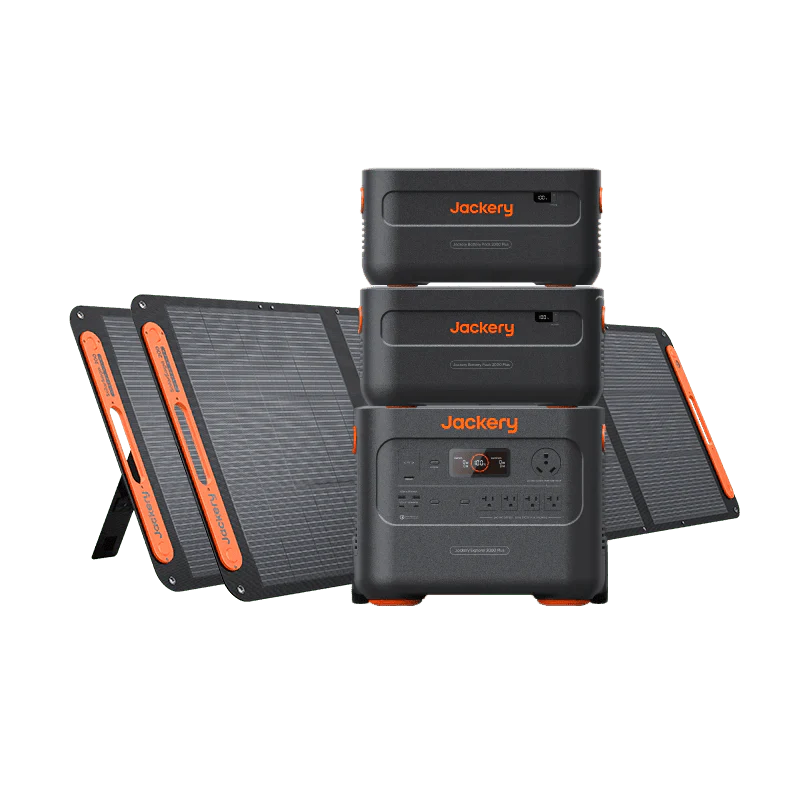
Summer gear disappears in a strange order. Tents go first, then coolers, then the gear people forgot they needed until the first blackout or long weekend. The Jackery Explorer 2000 Pro is back in that conversation because campers, RV owners, and storm-ready homeowners want one thing: a portable power station that can run more than phones and string lights. The 2000 Pro’s appeal is simple. It sits in the serious-power class, with official regional Jackery pages listing 2,160Wh capacity, 2,200W output, and 4,400W surge power, while also noting that some markets now point shoppers toward newer upgraded models. That makes any restock worth watching, but not worth buying blindly. In the U.S., the smart move is to compare availability, battery type, warranty terms, solar panel bundles, and newer 2000-series options before clicking checkout. For shoppers tracking outdoor gear, home backup tools, and seasonal product movement through consumer product updates, this is exactly the kind of restock that rewards patience more than panic.
Why This Restock Has Campers Paying Attention
A power station restock does not create demand by itself. Demand usually builds in the background, trip by trip, outage by outage, until shoppers start searching again. That is what makes the 2000 Pro interesting. It is not a tiny emergency brick. It is the kind of camping power supply people consider when they want a fridge, lights, phones, a fan, and maybe a coffee setup to survive the same weekend.
The 2kWh class feels different in real use
Small power banks are easy to buy because the promise is simple. Charge your phone. Maybe charge your laptop. Done.
A 2kWh portable power station asks a different question: what comfort do you refuse to give up when the grid is gone? That could mean keeping a 12V fridge cold at a state park in Colorado. It could mean running a CPAP during a humid night in Georgia. It could mean powering camera batteries, a router, and lights during a storm outage in Texas.
That is why this restock talk has weight. The 2000 Pro is listed on official Jackery regional pages with 2,160Wh capacity and 2,200W output, which places it far above casual phone-charging gear. A unit in this class can support more demanding appliances, but the best use is not “run everything.” The best use is choosing the few things that matter most.
Here is the part many buyers miss: more capacity does not make you more prepared unless you know your loads. A fridge that cycles on and off behaves differently than a heater that pulls steady power. A coffee maker can spike hard for a short time. A fan might sip power all night. The battery is only half the story.
Camping season exposed the weak spots
People tend to learn their power needs in public. A family pulls into a campground, plugs in too many things, and finds out the “big battery” they brought is not built for the job. A van owner runs a cooler all day, then realizes cloudy weather ruined their solar plan. A parent buys a cheap unit for a weekend trip, then discovers it cannot handle a bottle warmer and a fan together.
That friction is why a stronger solar generator starts looking less like a luxury toy and more like trip insurance.
The counterintuitive lesson is that the best buyers are not always extreme campers. Many are normal American households that camp twice a year and lose power once or twice a season. They want one box that can work at the lake, in the driveway, and during a thunderstorm. That mixed-use demand is stronger than pure outdoor demand because it gives the purchase more than one job.
A portable backup power buying guide should always start there. Not with the biggest number on the box. With the real things you expect to keep running.
Jackery Explorer 2000 Pro Specs That Still Matter
Spec sheets can make every power station sound like a small miracle. That is where shoppers get trapped. The better question is not whether the 2000 Pro is powerful. It is powerful. The better question is whether its strengths match how people in the U.S. are using backup and outdoor power in 2026.
Capacity sounds simple until you plan the weekend
The 2,160Wh figure matters because it gives you room to make imperfect choices. You can forget to unplug a light. You can run a fan longer than planned. You can charge several devices without turning the whole trip into math.
Still, watts and watt-hours are not the same thing. Watt-hours tell you how much stored energy you have. Watts tell you how hard the station can work at one time. A 2,200W output rating means the unit can handle many common household and campsite devices within its limit, while the surge rating helps with short startup spikes.
A practical example: a family camping near Lake Michigan might run a portable fridge, two phones, a lantern, and a small fan. That load is gentle. Add an electric kettle, an induction cooktop, or a power tool, and the station has to work in a different way. The 2000 Pro’s size gives breathing room, but it does not remove the need to plan.
One odd truth: the people happiest with big stations often use fewer devices, not more. They buy extra capacity so they do not have to hover over the screen every hour.
Fast charging changes the way people use it
Charging speed matters more than buyers think. A slow-charging station can be fine at home, but it becomes annoying when you are packing the truck, leaving for a campsite, or trying to refill between outage windows. Official Jackery regional pages describe the 2000 Pro as supporting fast AC charging, with a listed 2-hour AC recharge time on some pages.
That changes behavior. You are more likely to keep the unit ready if topping it off does not feel like a project. You are more likely to bring it on a trip if it can charge while you finish loading the cooler. You are more likely to use it during a power outage if you can refill it during short periods when grid power returns.
Solar is different. A camping power supply paired with panels depends on sun angle, cloud cover, shade, heat, and panel placement. Six hours of lazy panel placement is not the same as six hours of clean sun. That is not a failure. It is the normal mess of outdoor power.
This is where the 2000 Pro’s appeal becomes specific. It is not only about stored power. It is about how quickly you can get back to stored power after using it.
How It Compares With Newer Jackery 2000-Series Options
The restock question gets tricky because Jackery has newer 2000-series models in the market. Some current official product pages for the Explorer 2000 v2 list 2,042Wh capacity, 2,200W output, fast recharge, and a sold-out status on certain bundles at the time checked. That does not make the 2000 Pro irrelevant. It means shoppers need to compare the old favorite against the newer shelf.
Newer models may fit daily backup better
The 2000 v2 is positioned more toward modern home backup and easier handling, with Jackery’s U.S. page listing 2,042Wh capacity and 2,200W output. For many buyers, that is close enough in power class that weight, battery chemistry, charging setup, ports, and price become the deciding factors.
A weekend camper may care most about carrying comfort. A homeowner may care more about UPS-style switching, warranty, and how the unit behaves during a short outage. An RV owner may care about solar input and whether the outlets match their routine. Same power class. Different buyer.
That is the hidden reason older models keep drawing interest. Newer is not always better for every person. Sometimes an older unit becomes attractive when the price drops, a retailer clears inventory, or a shopper already owns matching panels.
Still, you should not treat any restock as proof that it is the best buy. It may be the best buy at one price and a poor buy $300 higher. The number that matters is not MSRP. It is the final cost of the station, panels, taxes, shipping, and warranty coverage.
“Sold out” can mean more than one thing
A product being sold out sounds simple. It rarely is.
It can mean demand outran supply. It can mean a retailer is between shipments. It can mean an older model is being cleared. It can mean bundles sold faster than standalone units. It can also mean the company is nudging buyers toward a newer model. Official Jackery pages in some regions mark the 2000 Pro as discontinued and point toward upgraded 2000-series products, so U.S. buyers should read restock claims with care.
That does not kill the deal. It changes the checklist.
Before buying, check whether the product is new, open-box, refurbished, or marketplace inventory. Look for warranty terms from the seller, not only from the brand. Confirm that the solar panels in the bundle match the unit. Read the return window. A heavy power station is not fun to return after you discover the listing was vague.
A solar generator comparison checklist helps here because the right choice often comes down to boring details. Boring details save money.
Who Should Buy It Before the Next Sellout
The people who should move fastest are not the loudest gear fans. They are the ones with a clear use case. When you know what you need to run, how long you need it, and where you will recharge, a restock becomes useful. Without that, it becomes shopping theater.
It makes sense for campers with real power needs
The 2000 Pro fits campers who bring more than a phone and a lantern. Think overlanding families, weekend RV travelers, photographers, tailgaters, and people who camp in places where heat, food storage, or medical devices matter. In those cases, a serious portable power station can make a trip calmer.
A simple scene says enough. You arrive at a national forest campsite on Friday evening. The cooler is packed. The kids want lights near the picnic table. Someone needs a fan to sleep. Phones are half dead because maps ran all day. A small battery would force choices right away. A 2kWh-class station gives you space to settle in before rationing power.
The non-obvious insight is that bigger power can make a campsite quieter. People often picture large stations running loud appliances. In practice, they can reduce the need for gas generators during low-load hours. Ready.gov warns that fuel-powered generators should only be used outdoors and away from windows, which is one reason battery stations appeal to households that want backup without fumes near living spaces. Ready.gov power outage guidance also reminds families to plan for refrigeration, devices, and food safety during outages.
A battery station is not a whole-home system. It is a cleaner, quieter bridge for selected needs.
It also fits storm-ready homes, with limits
For home backup, the 2000 Pro makes sense when you build a priority list. Refrigerator. Router. Phones. A lamp. Medical equipment after speaking with a provider. Maybe a fan. That is a smart list.
Trying to run a whole house from a portable box is where disappointment starts.
American outage needs vary by region. In Florida, the worry may be hurricane season and humid nights. In California, it may be wildfire shutoffs. In the Midwest, it may be storms that knock out power for a few hours. In the Northeast, it may be winter ice. The same solar generator can help in all those places, but the plan should change by climate.
For example, a Houston homeowner may care more about fans and refrigeration. A Montana cabin owner may care more about communication gear and short appliance runs. A New Jersey commuter may want the router and laptop alive during an outage. None of those buyers needs the same bundle.
That is why the best time to buy is before fear sets the price. Restocks after camping season can be useful because demand may cool, but storm season can pull it right back up. Watch the final price. Watch the seller. Watch the warranty.
Conclusion
A restock only matters when the product still solves a real problem. The 2000 Pro does. It gives campers and homeowners a serious pool of stored energy, enough output for demanding devices, and the kind of flexible use that makes sense across road trips, tailgates, cabins, and outages. Still, the smarter buyer will not chase the name alone. Compare it with current 2000-series models, check whether the listing is official or marketplace stock, and make sure the bundle fits your actual power plan. The Jackery Explorer 2000 Pro is most appealing when the price reflects its age and the seller stands behind it. Buy it for defined jobs, not for bragging rights. If it keeps your food cold, your devices charged, and your night calmer when power gets messy, that is the win worth paying for.
Frequently Asked Questions
How long can a 2000 Pro power a refrigerator?
Runtime depends on the refrigerator’s watt draw, cycling pattern, room temperature, and how often the door opens. A full-size fridge usually cycles instead of pulling steady power, so real runtime can be longer than simple watt math suggests. Test it at home before relying on it.
Is the 2000 Pro good for tent camping?
It can work well for tent camping if you need serious power, but it may be more than casual campers need. For phones, lights, and a small fan, a smaller unit may be easier to carry. For fridges or medical devices, the extra capacity helps.
Should I buy the 2000 Pro or a newer 2000-series Jackery?
Choose based on final price, warranty, battery chemistry, weight, ports, and solar input. A newer model may suit daily backup better, while the 2000 Pro can make sense if restocked at a strong discount from a trusted seller.
Can it run power tools at a campsite or jobsite?
Many common tools may run if their wattage and startup surge stay within the station’s limits. Check the tool label before plugging in. Saws, compressors, and heaters can draw more power than expected, so test one device at a time.
Does a solar panel bundle make the most sense?
A bundle helps if you camp off-grid or expect longer outages. Panels are less useful if the unit mainly sits at home for short blackouts. Match panel size to your recharge expectations, local sun, storage space, and setup patience.
Is a portable power station safer than a gas generator?
Battery stations avoid exhaust during use, which makes them easier around homes and campsites. They still require safe charging, dry storage, and proper load limits. Gas generators can handle different jobs but must stay outdoors and away from openings.
What should I check before buying a restocked unit?
Confirm seller status, warranty length, return policy, condition, included cables, panel compatibility, and whether it is new or refurbished. Also compare the final price against newer models. A restock is only attractive when the details line up.
Is the 2000 Pro worth it for emergency home backup?
It is worth considering for selected essentials such as a fridge, router, phones, lights, and certain medical devices after proper planning. It is not a replacement for a whole-home backup system. Treat it as a focused emergency tool.

Related Posts