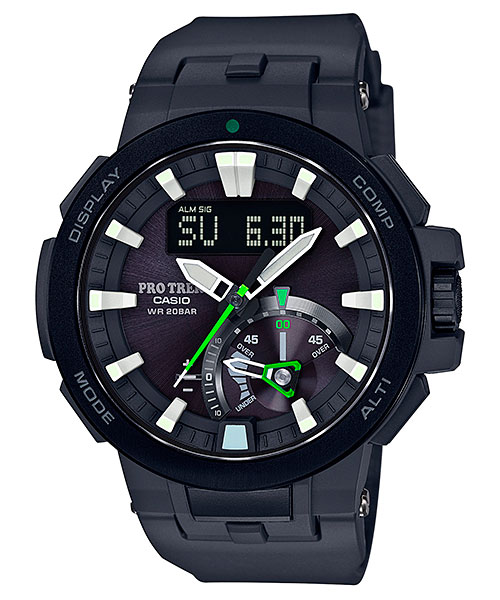
A late-season restock can make an older outdoor watch feel new again, especially when hikers, anglers, and road-trip buyers start comparing gear before the next long weekend. The Casio Pro Trek PRW7000 is drawing attention because it sits in a rare middle lane: solar power, analog-digital controls, field sensors, 200-meter water resistance, and radio-controlled timekeeping, not a fragile screen that wants daily charging. One thing needs clearing up early. Shoppers may call it a solar GPS watch, but the PRW7000 is better understood as a solar sensor watch with Multi-Band 6 radio time sync, compass, barometer, altimeter, thermometer, tide data, and moon information. Casio’s listed PRW-7000X-1 specifications show Tough Solar power, Multi Band 6, low-temperature resistance, and 200-meter water resistance. For buyers tracking restocks through outdoor gear buying updates, the smart move is not rushing the first listing you see. It is knowing which features matter, which labels are sloppy, and when a restock price is worth acting on.
Why This Restock Feels Different From a Normal Watch Listing
A standard watch restock is simple. A sold-out item returns, buyers check the price, and the story ends. The PRW7000 watch is different because it belongs to that class of gear people remember after using it in poor weather, weak service, or long days away from outlets. That changes buyer behavior. People are not only shopping for style. They are shopping for backup.
The PRW7000 watch sits between trail gear and daily wear
The appeal starts with the shape of the watch itself. It is large, busy, and tool-like, but it does not look like a plastic fitness tracker strapped to your wrist. The analog hands matter more than some buyers expect. On a lake, in a truck, or at a campsite, you can glance at hands faster than you can wake a smartwatch screen.
That old-school advantage feels small until your hands are cold. A hiker in Colorado checking direction near dusk does not want six app taps. An angler on the Gulf Coast does not want to dry his fingers before checking tide rhythm. A watch that keeps key outdoor data on the wrist earns its place by being boring in the best way.
The PRW7000 watch also has a collector angle. It is not one of the tiny minimalist field watches that disappear under a cuff. It announces itself. That can push some buyers away, but it pulls in people who want a visible instrument, not another blank black screen.
Why outdoor shoppers chase older sensor watches
The strange part is that older outdoor watches can gain appeal after newer models arrive. That sounds backward, but it makes sense when you think about failure points. More apps can mean more settings. More wireless features can mean more battery habits. More screens can mean more worry.
A solar outdoor watch with physical buttons feels dependable because it asks less from the owner. Casio says many models in this outdoor line pair Triple Sensor tools with solar charging, including compass, thermometer, barometer, and altitude readings. That is the point buyers keep coming back to. It is not nostalgia. It is control.
Restock interest usually rises when people start planning real trips. Spring hiking, summer fishing, fall hunting, and national park travel all create the same question: what still works when the phone becomes a camera, map, flashlight, and battery drain all at once? The answer does not have to be fancy. It has to be ready.
What Makes Casio Pro Trek Demand Spike After Outdoor Season
The post-season surge is not only about people missing a deal. It is about regret. Buyers spend a few months outdoors, notice what failed, then start looking for gear that would have made those trips easier. That is when a sensor-heavy watch starts looking less like a hobby purchase and more like a practical fix.
Solar outdoor watch appeal is less about charging and more about trust
People talk about solar power as if the only benefit is saving money on batteries. That misses the emotional side. A solar outdoor watch reduces one small worry before you leave home. You still pack water, layers, maps, and snacks. But you do not add “charge watch tonight” to the list.
Casio’s U.S. outdoor watch page frames solar power as a fit for field sensors because compass, altimeter, barometer, and thermometer features need steady power support. That makes sense in use. A weekend camper may never drain a modern smartwatch on day one, yet the charging habit still follows them. The PRW7000 takes a different path.
The non-obvious part is that solar charging helps casual users as much as serious hikers. A watch sitting near a window between trips can stay ready without a routine. That matters for Americans who do two big outdoor weekends a year, not twenty. Gear you do not babysit is gear you remember to wear.
Multi-Band 6 watch timing matters when phones disappear
A Multi-Band 6 watch does not sound exciting until you understand what it replaces. It is not trying to show you a moving map. It is trying to keep time correct through radio calibration, including the North American signal from Fort Collins, Colorado, when reception conditions allow it. Casio’s module guide lists Fort Collins as the U.S. transmitter location for supported North American city codes.
That timekeeping system pairs well with outdoor use because it stays quiet. You are not checking an app. You are not waiting for a satellite fix. You set the right home city, let the watch receive when it can, and carry on.
For a trustworthy background source, the National Institute of Standards and Technology explains that WWVB broadcasts from near Fort Collins help synchronize consumer products such as clocks and wristwatches across North America. That is less glamorous than GPS, but often more fitting for a wristwatch built around low-effort accuracy.
How to Judge a Restock Before You Click Buy
A restock headline can make any watch sound urgent. That is where buyers get sloppy. The better approach is slower: confirm the model, confirm the features, confirm condition, then decide whether the price matches the risk. A popular listing is not always a good listing.
Check the feature list before trusting the GPS label
Here is the detail that matters: many listings use broad search wording because shoppers type broad phrases. That does not make every phrase technically correct. The PRW7000 line is known for radio-controlled timekeeping and field sensors, not turn-by-turn navigation or stored trail maps.
Casio’s PRW-7000X-1 page lists Multi Band 6 time adjustment, Tough Solar power, 200-meter water resistance, and low-temperature resistance. The manual also describes radio-controlled atomic timekeeping and manual time setting when signal reception is not possible. That is useful, but it is not the same as a GPS sports watch.
This distinction protects your money. A buyer who wants breadcrumb trails, route uploads, heart-rate zones, and phone alerts should look elsewhere. A buyer who wants solar power, tide information, moon data, direction, pressure changes, and a tough analog-digital build is closer to the right target.
For more research before choosing between watch types, a placeholder internal guide like best outdoor watches for hiking can sit here once you have your final comparison page ready.
Read condition details like you would inspect hiking boots
Condition matters more on this model than it does on a simple desk watch. Buttons, crown action, sensor behavior, charging level, strap wear, crystal marks, and case screws all deserve attention. A clean photo of the dial is not enough.
Ask for the module number, box contents, recent charging behavior, and whether the sensors have been checked. If it is a used unit, look for photos taken in natural light. A polished listing can hide a tired strap, weak lume, or sticky button. The cheapest restock can become the most expensive one if you need parts after delivery.
The counterintuitive move is to avoid chasing the lowest number. A slightly higher price from a seller with clear photos, return support, and model-specific detail can be safer than a bargain listing with five vague words and one shadowy image. Outdoor gear gets used hard. Watches are no exception.
Who Should Buy It, Skip It, or Wait
The right buyer will love this kind of watch for years. The wrong buyer will complain within a week. That gap is not about quality. It is about expectation. A tool watch should match the way you move, not the way a product page makes you feel for ten minutes.
Best fit for anglers, hikers, and analog-digital watch fans
The strongest fit is the buyer who wants quick wrist data without turning every trip into a device-management exercise. Anglers may care about tide and moon information. Hikers may care about pressure trends and direction. Road travelers may like world time and radio sync. Watch fans may want the odd charm of a large analog-digital tool piece.
Casio’s own PRW-7000 material points toward water use, field sensors, and timekeeping support, with 200-meter resistance and a case size that clearly favors presence over slim dress-watch comfort. That makes it a better fit for weekends, travel, gear bags, workshops, boats, and trailheads than formal office wear.
There is also a practical USA angle. Many American buyers split time between suburbs and short outdoor escapes. They may not need expedition gear. They need something that can handle rain, a campsite, a fishing pier, a road trip, and a week on the dresser without becoming another thing to charge.
When a newer connected watch makes more sense
Skip it if your main goal is fitness tracking. This is not the watch to buy for wrist-based heart rate, recovery scores, music storage, or app alerts. You can force that comparison, but it will not be fair. A connected sports watch is built around data logging. This model is built around access to field information.
You may also want to wait if the restock price gets too close to modern alternatives. Once prices climb, the argument changes. A collector may still pay. A practical buyer should compare fresh warranty terms, seller support, and the cost of newer solar outdoor models.
For a future internal comparison, solar watch buying guide would help readers decide whether they need a sensor watch, a connected sports watch, or a simpler solar field model. That is the choice that matters. Not hype. Fit.
Conclusion
Restocks create pressure, and pressure makes buyers careless. This watch deserves a calmer look. The PRW7000 is appealing because it feels like a field tool from a different design age, one that values buttons, hands, sensors, and light-powered readiness over constant screen time. That is its charm.
The Casio Pro Trek PRW7000 is not the right answer for every outdoor buyer, and that is fine. It makes the most sense for someone who wants solar dependability, radio time sync, water-ready build quality, and practical environmental readings without turning every hike or fishing trip into another phone session. The smarter move is to verify the exact listing, ignore loose GPS wording, and pay more attention to condition than hype.
If the price is fair, the seller is clear, and the features match your life, this restock is worth watching closely. Buy the watch because it solves your kind of problem, not because the internet says stock is moving fast.
Frequently Asked Questions
Is the PRW7000 a true GPS watch?
No. It is better viewed as a solar sensor watch with radio-controlled timekeeping, compass, barometer, altimeter, thermometer, tide data, and moon information. Buyers who need route tracking, maps, or breadcrumb navigation should compare modern GPS sports watches instead.
Is the PRW7000 worth buying after a restock?
Yes, if the price is fair and the listing confirms model, condition, charging behavior, and working sensors. It is most appealing for buyers who value solar power, physical controls, and outdoor readings more than smartwatch apps.
What should I check before buying a used PRW7000?
Check crystal condition, strap wear, crown action, button response, sensor function, charging level, and seller return terms. Ask for clear photos from several angles. A vague listing is risky, even when the price looks tempting.
Does Multi-Band 6 work everywhere in the United States?
Reception depends on location, building interference, weather, time of day, and home city settings. Many users get the best results near a window overnight. If reception fails, the watch can still be set manually.
Who is the best buyer for this watch?
The best buyer is someone who hikes, fishes, camps, travels, or enjoys large analog-digital tool watches. It fits people who want quick outdoor information on the wrist without relying on phone battery or daily watch charging.
Should I buy this instead of a Garmin watch?
Choose this if you want solar timekeeping, field sensors, and a traditional watch feel. Choose Garmin or another sports watch if you need GPS routes, workout tracking, heart-rate data, recovery metrics, music, or phone alerts.
Why do older outdoor watches become popular again?
Older sensor watches often feel simpler and tougher than newer screen-first devices. Buyers come back to them because they offer useful tools with fewer charging habits, fewer settings, and a more mechanical-feeling wrist experience.
What price is reasonable for a restocked PRW7000?
A fair price depends on condition, region, seller support, included box, and whether it is new or used. Compare several listings before buying. Clear condition proof and return protection can be worth paying more for.

Related Posts