A business trip can fall apart before the boarding door closes. The Osprey Transporter 40 speaks to that exact pain point: one bag, short trip, no checked-luggage gamble, and no roller wheels rattling across a hotel lobby at 1 a.m. For U.S. flyers who jump between client visits, trade shows, coworking days, and quick family stops, this bag feels less like outdoor gear and more like a calm answer to a messy week. It gives you duffel access, backpack carry, and enough room for two or three sharp outfits without asking you to pack like a thru-hiker. That is why the current buzz makes sense. A useful travel product earns attention when it removes small frictions people deal with every month. Readers who track travel product visibility already know this pattern: the gear that travels best online often solves one plain problem in real life. This one does that by staying flexible, tough, and simple, which is exactly what a rushed work trip needs.
Why the Osprey Transporter 40 Works for Airport-to-Office Days
Business travelers are not packing for a fantasy vacation shot. They are packing for a Tuesday morning flight, a half-charged laptop, a blazer that cannot look crushed, and a rental-car counter that already has a line. The appeal of this bag starts there. It is not trying to replace every suitcase. It is trying to make short work trips less brittle, especially for people who move from plane to rideshare to lobby without a long reset in between. That use case sounds plain, but it is where many travel bags fail. They look good when empty and turn clumsy once the real week enters the picture.
A softer shape helps when bins get ugly
A rigid roller has one honest strength: it rolls. After that, it can turn stubborn fast. Hard corners do not bend when an overhead bin is half full, and wheels add length even when the case itself looks small. That matters on packed U.S. routes where gate agents start eyeing bags before boarding group five.
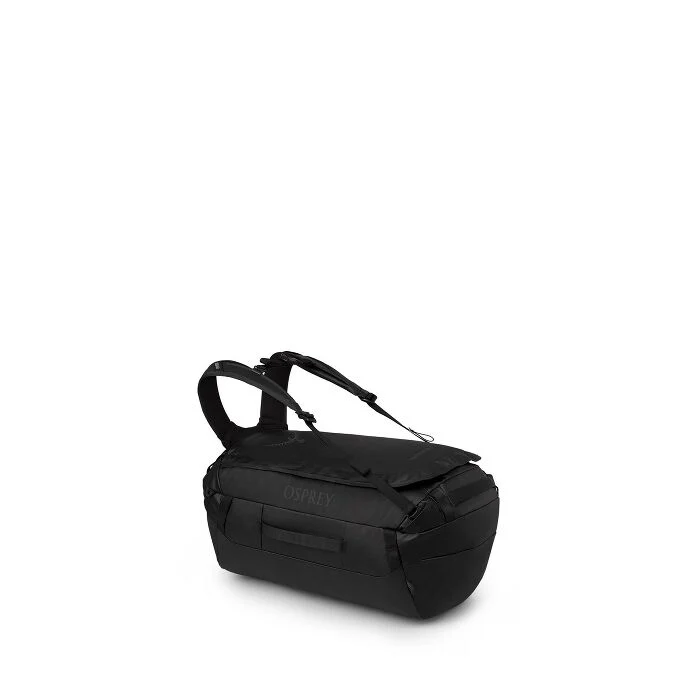
Osprey lists this model at 40 liters, with dimensions of 20.9 by 12.6 by 12.2 inches and a weight near 2.11 pounds. It also describes the bag as carry-on sized, with a large U-zip opening, lockable access, a weather-protected zip path, and a stowaway backpack harness. Those numbers explain part of the attention. The bag is big enough for a tight work capsule, yet soft enough to settle into spaces where a boxy case may fight back.
The non-obvious win is not volume. It is forgiveness. A carry-on duffel bag can flex around shoes, packing folders, and a sweater without wasting space in a shell. That does not mean you should overstuff it. It means the bag gives you a little grace when the trip changes after you already packed. A late dinner invite, a branded hoodie from a conference, or a folder from a client meeting can fit without turning the whole bag into a hard cube.
The best work bag is the one you can carry wrong
Business travel has awkward minutes. You carry coffee in one hand, scan your phone with the other, then discover the airport train is down. A bag that only works in one carry mode can become a tax on your patience. The best one is forgiving when you carry it the wrong way for the wrong reason, because travel does not care how neatly the product photos were staged.
This one handles that better than a standard duffel because the backpack harness can hide away when you do not need it. Osprey says the harness has padded straps, an adjustable sternum strap, and a separate stow pocket, and the harness can be removed. That sounds like an outdoor detail, but it fits office travel. You may not want visible shoulder straps when walking into a meeting space. You may want them badly when sprinting between terminals.
A shoulder strap can feel more polished, but it is not always kinder to your body. A backpack carry spreads the load when the walk gets long. That makes the bag less dressy for ten minutes, then more useful for the next forty. For frequent flyers, that trade is not sloppy. It is sane. The trick is to think of the straps as a tool, not a style statement. Use them when movement matters. Hide them when the room calls for a cleaner look.
What Business Travelers Are Actually Solving With This Bag
The buzz around travel gear often sounds like people are chasing style. Some are. Yet most frequent work travelers are hunting for a narrower kind of relief. They want fewer decisions before dawn, fewer fees, fewer broken zippers, and fewer moments where a bag makes them look unprepared. A strong business travel bag does not have to impress a stranger at baggage claim. It has to protect the rhythm of the day. That means it should be easy to pack on Sunday night, easy to carry on Monday morning, and easy to ignore once the work starts.
One-bag travel is a calendar problem
A short work trip is rarely clean. Monday might be a flight from Chicago to Dallas. Tuesday might include a client lunch, a site walk, and a late return through Atlanta. The bag has to hold office clothes, casual clothes, chargers, toiletries, and sometimes gym shoes because hotel fitness rooms are where some travelers protect their sanity.
That is why a 40L travel duffel can make sense for a two-night run. You can pack one pair of dress shoes at the bottom, roll soft layers around them, lay trousers flatter near the top, and keep the quick-access pocket for a badge, earbuds, or a receipt you know finance will ask about later. A good carry-on packing checklist helps, but the bag still has to meet the day halfway.
The counterintuitive part is that a larger checked bag can create more stress, not less. Extra room invites weak packing. You add a second sweater, a spare pair of jeans, a backup jacket, then drag dead weight through the trip. A stricter business travel bag can make you choose better before the week starts. That choice pays off when the meeting runs late and you are not waiting at a carousel while your rideshare driver circles the curb.
A small laptop bag can still do the office work
This duffel should not become your whole office. That is where some buyers get the setup wrong. If your laptop, charger, notes, and passport live deep inside the main compartment, every security line and coffee shop becomes a small unpacking event. The bag may have room, but room is not the same as access.
The smarter setup is a two-part system. Let the duffel carry clothes and bulk. Let a slim personal item carry your work tools. That split keeps the main bag simple and saves your shoulders from carrying one overloaded brick everywhere after landing. It also keeps your work life looking less chaotic. You can walk into a lobby with a neat laptop sleeve or small tote while the duffel stays in the hotel room.
For example, a consultant flying from Newark to Charlotte could board with this duffel overhead and a slim laptop tote under the seat. The tote handles the meeting. The duffel handles the trip. That sounds ordinary, but it is exactly why the bag makes sense. It does not need to be the star in every scene. A travel bag that knows when to disappear is often the one you keep using.
Packing It for Monday Meetings, Gym Gear, and Red-Eye Flights
Once a bag gets attention, people tend to ask the wrong question first. They ask how much it fits. The better question is how it behaves when it is full. Forty liters can be tidy or chaotic, depending on how you build the inside. The goal is not to win a packing contest. The goal is to open the bag in a hotel room and know where everything is while your brain is tired. A good packing plan also protects your clothes from your shoes, your toiletries from your shirts, and your patience from your own habits.
Build around flat layers, not travel cubes alone
Packing cubes help, but they can turn a duffel into a stack of soft bricks. That works for T-shirts. It does not always work for workwear. A blazer, chinos, or a dress shirt needs flatter handling, even if the fabric claims it can bounce back. Duffels reward shape awareness. Treat the inside like a tray, not a drawer.
Start with shoes at one end in a bag. Place heavier items low, then use flat folded layers across the width. Put socks, underwear, and gym clothes in one cube, not four. Too many cubes eat the shape that makes a duffel useful. A 40L travel duffel rewards wide, calm packing more than tiny compartments. The fewer blocks you create, the easier it is for the bag to flex without crushing the item you care about.
Here is a practical U.S. work-trip load: one blazer worn on the plane, two shirts, one knit polo, one pair of chinos, one gym kit, sleepwear, underwear, toiletries, and one extra pair of shoes. Wear the bulkiest layer on the plane. Keep the bag under control instead of packing for every possible mood. The steamer is optional. The restraint is not. That single habit is what separates clean one-bag travel from a swollen duffel that fights you at every stop.
Keep liquids and cables where tired hands can find them
The most elegant packing plan can fail at the checkpoint. Liquids, gels, creams, and aerosols still need attention in a carry-on setup. TSA states that travel-size liquid containers are limited to 3.4 ounces or 100 milliliters, and passengers are limited to one quart-size bag for those items. Keep that pouch near the top, not buried under clothes.
Cables deserve the same respect. A laptop charger packed loose inside the main compartment will find a way to knot itself around a shoe or belt. Use one pouch for power, one spot for toiletries, and one pocket for small items you touch in transit. That simple map matters when your flight lands late and you still have to answer a message from your manager.
There is also a style reason to pack this way. Digging through a duffel in a hotel lobby looks worse than carrying one. A tidy system lets the bag stay casual without making you look careless. It also saves time in the morning, when you are half awake and trying not to leave a charger behind. The best packing systems feel almost boring. That is the point.
Where It Beats a Roller and Where It Does Not
No bag deserves blind praise. A duffel can be the right answer for one traveler and the wrong answer for another. The smartest buyers do not ask whether it is popular. They ask whether its strengths match their routes, body, wardrobe, and patience. A soft bag changes how you move, and that change can feel freeing or annoying. The difference comes down to weight, walking distance, and how formal your travel days need to look.
Soft sides can save a trip at the gate
The Federal Aviation Administration’s carry-on baggage tips say the maximum carry-on size for most airlines is 45 linear inches, meaning height, width, and depth combined, and say larger bags should be checked. Airline rules still vary, so you should check the carrier before flying, especially on smaller aircraft or basic fares. Soft luggage does not erase rules, but it can reduce trouble when bins are tight.
This is where the duffel format feels practical. A roller stands there asking for a full rectangle. A soft bag can settle around empty pockets of space. On a regional connection from Denver to Boise, that may be the difference between keeping your gear with you and watching it get tagged at the jet bridge. That matters if your meeting clothes, medications, or presentation tools are inside.
The hidden benefit is silence. Wheels are handy, but they announce every sidewalk crack, parking deck seam, and hotel hallway tile. Carrying your bag on your back is not glamorous, yet it can feel calmer when the trip is already loud. It also lets you move over stairs, curbs, and shuttle-bus steps without the stop-start rhythm that makes rollers tiring in crowded places.
A duffel asks more from your shoulders
The weakness is honest. If you routinely pack heavy, walk long city blocks, or have neck and shoulder pain, a roller may be kinder. Backpack straps help, but they do not remove weight. They move it. That can be fine from the gate to the rideshare pickup. It can feel different after a fifteen-minute walk to a downtown hotel in summer heat.
That is why this bag fits a certain traveler best: someone who packs with discipline, flies short trips, values overhead-bin control, and can carry a loaded pack through an airport without resenting it. If you need three suits, dress shoes, backup shoes, samples, and a full-size toiletry kit, choose another path. The right bag should support your habits, not shame you for having them.
A good business travel gear guide should say this plainly. The carry-on duffel bag is not a magic fix. It is a sharp tool. In the right hands, it makes travel feel lighter. In the wrong routine, it becomes one more thing to manage. The smartest move is to test your load at home. Pack it, wear it for ten minutes, climb a flight of stairs, then decide. Your shoulders will tell the truth faster than any review.
Conclusion
The best travel gear rarely wins because it has the longest feature list. It wins because it removes a few repeat annoyances and stays out of your way. That is the case here. The Osprey Transporter 40 wins attention because it respects how work trips actually feel: rushed, uneven, and full of small choices that can either drain you or help you move cleanly. It gives short-trip travelers a tough main compartment, flexible carry, and a size that encourages cleaner packing. That saves mental space when the schedule has no slack. It is not ideal for everyone, and that honesty makes the recommendation stronger. A roller still fits travelers who pack heavy or need a more formal look from curb to conference room. But for the person who wants one dependable bag for quick U.S. flights, hotel nights, and early meetings, this model has a clear place. Check your airline’s rules, keep your work tools separate, and treat the main compartment like a wardrobe, not a junk drawer. Pack lighter, move cleaner, and let the bag do what it does best: make the trip feel less fussy.
Frequently Asked Questions
Is this duffel good for business trips?
Yes, it fits short work trips best. It gives you room for clothes, shoes, and toiletries while staying flexible enough for overhead-bin travel. Pair it with a slim laptop bag so your work items stay easy to reach during flights and meetings.
Can a 40-liter duffel work as a carry-on?
Often, yes, but airline rules vary. Osprey lists this model as carry-on sized, and its dimensions sit within the range many U.S. flyers expect for overhead travel. Always check your airline before flying, since aircraft and fare rules can change what is allowed.
What should I pack in it for a two-night work trip?
Pack two shirts, one pair of trousers, one casual layer, gym clothes, sleepwear, underwear, toiletries, and one extra pair of shoes. Wear the bulkiest layer on the plane. Keep your laptop and documents in a separate personal item.
Is a duffel better than a roller for frequent flyers?
It depends on your route and body. A duffel is better when you value flexibility, stair handling, and quick overhead storage. A roller is better when you carry heavy loads, walk long distances, or need a more formal arrival look.
Does it have enough organization for work travel?
It has useful pockets, but it is not a mobile office. Treat the main space as clothing storage and use pouches for liquids, cables, and small items. For laptop-heavy days, a separate personal item creates a cleaner system.
How do I keep clothes from wrinkling in a duffel?
Use fewer cubes, fold work clothes flatter, and avoid stuffing the bag until it bulges. Wear your blazer during the flight when possible. Put shoes at one end and let softer items fill gaps without pressing hard against collars or hems.
Is this bag too casual for business travel?
For many U.S. work trips, no. It looks more relaxed than a hard-sided roller, but clean packing and neutral clothing keep the whole setup sharp. For law, finance, or formal client settings, pair it with a polished personal item.
Who should skip this kind of travel bag?
Skip it if you pack heavy, need wheels, carry several suits, or dislike backpack-style carry. It suits disciplined packers who travel for short trips and want flexible movement through airports, hotels, rideshares, and quick office stops.

Related Posts