A good pan never feels exciting until the old one starts lying to you. Eggs grip the surface. Sauce burns at the edges. A chicken breast cooks pale in one spot and dark in another. That is why the sudden rush around Hard Anodized Cookware feels less like hype and more like a kitchen problem finally getting noticed. For U.S. shoppers watching TV featured cookware jump into carts, the Calphalon set has a clear pull: it promises everyday ease without looking like a short-term gadget. Shoppers who follow independent product coverage have seen this pattern before. A familiar brand gets a bright TV moment, then families compare it against what is already failing in their cabinets. Calphalon’s own listing says the Signature nonstick set is metal-utensil-safe, dishwasher-safe, oven-safe up to 500°F, and made with a PFOA-free 3-layer nonstick interior. The wiser question is not whether it is popular. It is whether it fits the way you cook on Tuesday night.
Why Hard Anodized Cookware Caught So Many Home Cooks at Once
The TV bump matters because cookware is often ignored until it becomes annoying. People put up with wobbly lids, scratched skillets, and thin pans for years. Then a product appears in a setting that makes it feel practical, not fancy. That is when a Calphalon Signature cookware set stops looking like a splurge and starts looking like a fix.
A TV moment works when the kitchen pain is already there
Cookware does not go viral like sneakers or phones. It spreads through a quieter kind of pressure. Your omelet tears. Your pasta pot stains. Your pan handle gets hot at the wrong time. By the time a segment shows a clean set doing calm, useful work, the viewer is not being convinced from zero. They already have a list of small kitchen failures.
That is why TV featured cookware can move fast in the U.S. market. It reaches people while they are half-thinking about dinner, not while they are deep in product research. A home cook in Ohio might see a skillet release salmon without shredding the skin. A parent in Arizona might notice the dishwasher-safe claim because the sink is already full.
The non-obvious part is that the “feature” is not the full reason people buy. It acts more like permission. Many shoppers were already tired of cheap nonstick pots and pans that felt good for three months, then started acting old before winter.
Brand memory still carries weight in American kitchens
Calphalon has an advantage that newer cookware brands have to buy with heavy advertising. Many U.S. buyers already know the name from department stores, wedding registries, outlet malls, or a parent’s cabinet. That history lowers the fear that comes with spending more than you planned.
Calphalon Signature cookware also sits in a useful middle zone. It is not bare stainless steel, which scares off cooks who hate stuck eggs. It is not a bright social-media-only set that looks better on a shelf than on a burner. It feels familiar enough for daily meals but upgraded enough to explain the price.
Here is the counterintuitive point: the safest cookware purchase is not always the most permanent one. Cast iron can last for decades, yes, but many households do not want seasoning rules, rust concerns, or the weight. A set that lasts several solid years with less fuss may serve a busy kitchen better than an heirloom pan nobody reaches for.
What the Set Promises Beyond the Selling-Out Buzz
Popularity can distort judgment. When shoppers hear “selling out,” they often stop asking whether the pieces make sense for their stove, their sink, and their meals. That is the wrong move. A cookware set earns its space only when the pieces solve repeat problems, not when the box looks generous.
The value is in daily contact, not the piece count
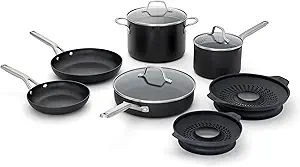
A 10-piece set sounds large until you remember lids count as pieces. What matters is whether the pans match your real cooking rhythm. A skillet for eggs and grilled cheese gets more work than a stockpot in many apartments. A sauté pan may matter more than a second saucepan if you cook chicken, vegetables, and pan sauces after work.
Official product details list the Signature set as oven-safe up to 500°F, which gives it more range than basic stovetop-only pans. That matters for U.S. cooks who start pork chops on the burner and finish them in the oven, or who keep pancakes warm while the second batch cooks. It also helps small kitchens where fewer tools need to do more jobs.
The quiet test is simple: name five meals you cook often. If the set improves three of them, it may fit. If you are buying because the product looked polished on TV, wait. A pan that never leaves the cabinet is not a deal.
Nonstick pots and pans are about control, not laziness
Some food people talk about nonstick like it is training wheels. That misses how Americans cook at home. Most people are not making restaurant sauces on a Tuesday. They are reheating rice, scrambling eggs before school, cooking turkey burgers, or trying not to ruin fish after work.
Good nonstick pots and pans reduce friction in that kind of kitchen. Less oil. Faster cleanup. Fewer ruined delicate foods. A stronger interior also matters because the common failure point is not always one dramatic scratch. It is the slow dulling of the surface after months of scraping, stacking, and rushed washing.
Calphalon says this line has a 3-layer nonstick interior and is metal-utensil-safe. That does not mean you should attack it with a fork like you are cleaning a grill. It means the set is built for a household where someone will use the wrong spoon sooner or later. Real kitchens are not product demos. They have teenagers, roommates, tired parents, and one person who never reads care cards.
How to Judge the Deal Before Stock Runs Thin
A sellout headline can make people rush. That is the point of the headline. The smarter buyer slows down for five minutes and checks the parts that will matter after the TV glow fades. A strong set can still be wrong for your burner, your storage, or your cooking style.
Match the set to your stove and storage first
Before buying, check burner size. Wide skillets can cook poorly on small electric coils because heat stays near the middle. Glass cooktops need flat bottoms that sit steady. Gas burners give more forgiveness, but pan balance still matters when a saucepan is full.
Storage is the second test. If you stack pans tightly, protect the cooking surface. A towel, pan protector, or even a paper plate between skillets can keep the interior from taking pointless damage. That small habit can matter more than the brand name.
This is where smart kitchen buying guides can help readers compare what they own against what they plan to buy. A set may look complete online, but your cabinet tells the truth. If the tallest pot blocks the shelf or the lids slide every time you open the door, the purchase becomes daily irritation.
Check safety language without getting lost in fear
Cookware safety talk can get messy fast. Some shoppers see “PFOA-free” and assume it means every concern is gone. Others see “nonstick” and assume danger. Neither reaction helps. The better approach is to read the material claims, follow heat guidance, and replace damaged pans when the surface is no longer sound.
The FDA explains that cookware can fall under food-contact substances, meaning materials that touch food but are not meant to affect the food itself. Readers who want the regulatory backdrop can review the FDA’s plain-language page on food-contact substances. That does not turn a shopper into a chemist, but it gives a grounded place to start.
The non-obvious safety habit is heat discipline. Many nonstick problems begin when a pan is heated empty or used on high heat because someone is in a hurry. Medium heat often cooks better anyway. It gives proteins time to release, keeps fats from smoking, and protects the surface.
Who Should Buy It and Who Should Skip It
The best cookware choice depends less on the commercial and more on your kitchen personality. Some people want easy cleanup above all else. Some want deep browning. Some want one pan they can abuse for twenty years. Calphalon Signature cookware has a lane, and it is not for everyone.
It fits busy homes that need forgiving tools
This set makes the most sense for people who cook often but do not want cookware to become a hobby. Think weeknight pasta, scrambled eggs, quesadillas, sautéed vegetables, pancakes, chicken cutlets, and one-pot rice dishes. In that world, the benefit is not drama. It is fewer tiny failures.
Nonstick pots and pans also help new cooks build confidence. A college graduate setting up a first apartment in Dallas may not want stainless steel sticking lessons on day one. A family replacing mismatched pans in New Jersey may care more about cleanup than perfect searing. Those are honest needs.
TV featured cookware often attracts impulse buyers, but this is where the impulse may line up with real use. If your current set is thin, warped, or scratched, replacing it with a sturdier option can change how often you cook at home. That can save more than the sale price over time, especially when takeout has become the backup plan.
Skip it if you want high-heat browning above all
A nonstick set is not the best tool for everything. Steak lovers, cast-iron fans, and sauce builders may feel boxed in. Stainless steel, carbon steel, or cast iron can handle aggressive heat and fond better. If your favorite meal starts with a ripping-hot pan and ends with deglazing, this set should not be your only cookware.
There is also the issue of lifespan. Even good coated cookware does not age like cast iron. You can care for it well, but the surface will not improve over time. That is not a flaw. It is the trade.
Calphalon’s warranty page says buyers may need proof of purchase and photos when making a claim, which is a reminder to keep receipts and order records. For more help comparing coated pans against longer-life materials, cookware material comparison tips can guide the next step. Buy the set for what it does well, not for what another material does better.
Conclusion
A cookware rush can make a product feel more urgent than it is. Still, this one has a practical reason behind the noise. Many American kitchens are full of tired pans that make simple meals harder than they need to be. The interest in Hard Anodized Cookware speaks to that gap: people want tools that cook evenly, clean without a fight, and survive real household habits. The Calphalon set appears strongest for busy homes that want better daily performance without moving into chef-grade maintenance. It is less ideal for cooks who care most about high-heat searing, bare-metal durability, or decades-long ownership. That honest line matters. If the pieces match your meals, your stove, and your storage, the TV buzz may point you toward a useful upgrade. If not, let the sellout pressure pass and choose cookware that fits your real life. Buy for the meals you make most, and your kitchen will thank you long after the segment is forgotten.
Frequently Asked Questions
Is the Calphalon Signature set worth buying for everyday cooking?
Yes, it can be worth buying if you cook eggs, pasta, vegetables, pancakes, chicken, and quick weeknight meals often. Its main value is easy release, lower cleanup stress, and better durability than thin budget pans. It is not the best pick for high-heat steak searing.
Why do cookware sets sell out after a TV feature?
A TV feature gives shoppers a quick visual reason to act, especially when the product solves a problem they already have. Cookware is often replaced after frustration builds. Seeing a familiar brand perform well can push people from “maybe later” to checkout.
Can metal utensils be used with Calphalon Signature cookware?
The official product listing describes the Signature nonstick interior as metal-utensil-safe. That said, softer tools are still smarter for long-term care. Silicone, nylon, or wood can help preserve the surface, especially if pans are stacked or used by several people.
Is this type of nonstick set safe for family kitchens?
It can be safe when used as directed, kept away from overheating, and replaced if the coating becomes badly damaged. Follow the brand’s care rules, avoid empty high-heat preheating, and do not treat nonstick pans like stainless steel or cast iron.
What meals work best in this Calphalon set?
Eggs, fish, grilled cheese, pancakes, rice dishes, sautéed vegetables, turkey burgers, and low-oil chicken cutlets are strong fits. The set is made for foods that benefit from easy release and controlled heat rather than deep browning or intense stovetop charring.
Should I buy a full set or one skillet first?
Buy one skillet first if you already own decent pots and only need better food release. Choose the full set if your current cookware is mismatched, warped, scratched, or missing key sizes. A set makes sense when several pieces will get weekly use.
How can I make nonstick cookware last longer?
Cook mostly on low to medium heat, avoid aerosol sprays, hand wash when practical, and separate stacked pans with protectors. Let pans cool before washing. The biggest mistake is treating nonstick like a broiler pan or using high heat as the default.
What should I check before buying during a sellout rush?
Check the piece list, lid count, oven-safe temperature, return policy, warranty terms, burner fit, and cabinet space. Do not buy only because stock looks low. A rushed cookware purchase feels exciting for one day, but a poor fit annoys you for years.

Related Posts